Optimización del enraizamiento y brotación en esquejes de Bougainvillea glabra Choisy con reguladores de crecimiento
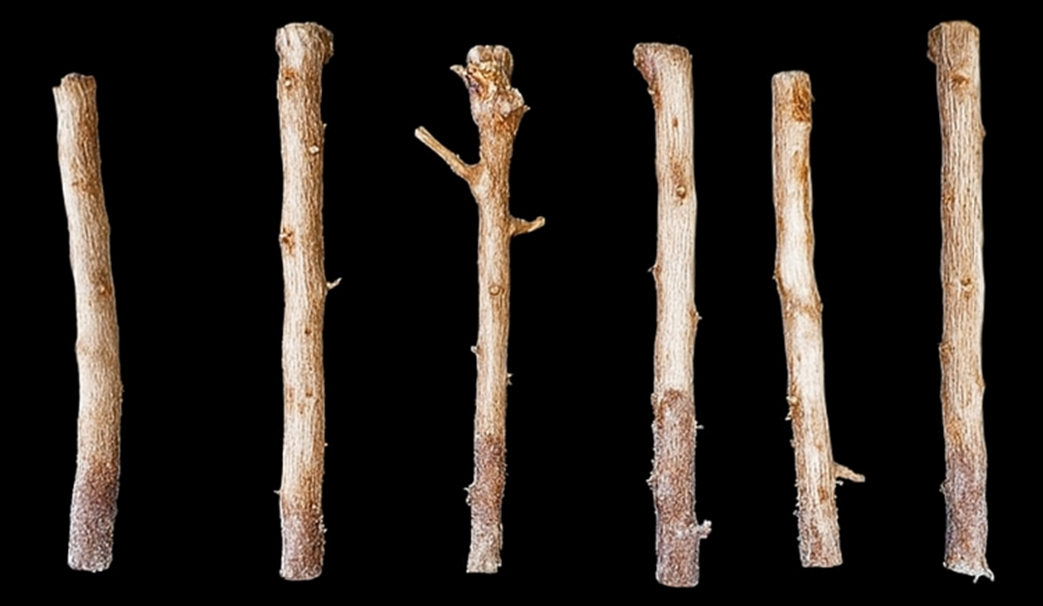
Reproducción de bugambilia
DOI:
https://doi.org/10.60158/3xera837Palabras clave:
crecimiento vegetal, plantas ornamentales, promotores de crecimientoResumen
La propagación por esquejes de Bougainvillea glabra es una práctica clave en viveros ornamentales, pero su eficiencia depende de señales hormonales exógenas. El objetivo del presente estudio fue evaluar el efecto de tres reguladores de crecimiento vegetal (RCV) comerciales, ProRoot® (ANA+IBA), BioGib® (GA₃) y ácido salicílico (AS) grado reactivo respecto a un control (agua) sobre el desempeño de esquejes de b. glabra a los 60 días después del trasplante. El ensayo se estableció en bloques completos al azar (tres repeticiones por tratamiento). Se registró el número total de rebrotes, hojas, raíces primarias y área foliar. Los datos se analizaron mediante un análisis de varianza (ANOVA) y las medias se compararon utilizando la prueba de Tukey. Todos los RCV mejoraron significativamente las variables respecto al control. BioGib promovió el crecimiento aéreo, con la mayor formación de brotes (5.78) y el mayor número de hojas (35.5). ProRoot destacó en el número de raíces, maximizando el número de raíces primarias. El AS mostró efectos intermedios y consistentes sobre brotación y enraizamiento. En conjunto, los resultados indican que la combinación estratégica de GA₃ (para vigor de la parte aérea) y auxinas (para inducción radicular) puede optimizar la producción de plántulas homogéneas y vigorosas de B. glabra en condiciones de vivero, mientras que el AS representa una alternativa de bajo costo con beneficios fisiológicos complementarios. Estos hallazgos ofrecen criterios prácticos para seleccionar RCV según el objetivo y las restricciones operativas del vivero.
Descargas
Referencias
Bhatla, S.C., Lal, A.M., & Bhatla, S.C. (2018). Plant growth regulators: An overview. En S.C. Bhatla & A.M. Lal (Eds.), Plant Physiology, Development and Metabolism (pp. 559–568). DOI: https://doi.org/10.1007/978-981-13-2023-1_14
Bouteraa, M.T., Ben Romdhane, W., Baazaoui, N., Alfaifi, M.Y., Chouaibi, Y., Ben Akacha, B., Ben Hsouna, A., Kačániová, M., Ćavar Zeljković, S., Garzoli, S. & Ben Saad, R. (2023). GASA proteins: Review of their functions in plant environmental stress tolerance. Plants, 12(10), 2045. https://doi.org/10.3390/plants12102045 DOI: https://doi.org/10.3390/plants12102045
Campbell, S. M., Anderson, S. L., Brym, Z., & Pearson, B. J. (2021). Evaluation of substrate composition and exogenous hormone application on vegetative propagule rooting success of essential oil hemp (Cannabis sativa L.). bioRxiv Preprint. https://doi.org/10.1101/2021.03.15.435449 DOI: https://doi.org/10.1101/2021.03.15.435449
Cho, H. T., & Kende, H. (1997). Expression of expansin genes is correlated with growth in deepwater rice. The Plant Cell, 9(9), 1661–1671. https://doi.org/10.1105/tpc.9.9.1661 DOI: https://doi.org/10.1105/tpc.9.9.1661
Cosgrove, D. J. (2024). Plant cell wall loosening by expansins. Annual Review of Cell and Developmental Biology, 40, 329-352. https://doi.org/10.1146/annurev-cellbio-111822-115334 DOI: https://doi.org/10.1146/annurev-cellbio-111822-115334
Datta, S.K., Jayanthi, R., & Janakiram, T. (2022). Bougainvillea. En T. Janakiram & R. Jayanthi (Eds.), Floriculture and Ornamental Plants (pp. 643–675). DOI: https://doi.org/10.1007/978-981-15-3518-5_2
Di Rienzo, J., Casanoves, F., Balzarini, M., González, L., Tablada, M., & Robledo, C. (2020). InfoStat (Versión 2020) [Computer software]. Universidad Nacional de Córdoba. https://www.infostat.com.ar
Druege, U., Hilo, A., Pérez-Pérez, J. M., Klopotek, Y., Acosta, M., Shahinnia, F., Zerche, S., Franken, P., & Hajirezaei, M. R. (2019). Molecular and physiological control of adventitious rooting in cuttings: Phytohormone action meets resource allocation. Annals of Botany, 123(6), 929–949. https://doi.org/10.1093/aob/mcy234 DOI: https://doi.org/10.1093/aob/mcy234
Dzib-Ek, G., Villanueva-Couoh, E., Garruña-Hernández, R., Vergara-Yoisura, S., & Larqué-Saavedra, A. (2021). Effect of salicylic acid on tomato germination and root growth. Revista Mexicana de Ciencias Agrícolas, 12(4), 735 – 740. https://doi.org/10.29312/remexca.v12i4.2642 DOI: https://doi.org/10.29312/remexca.v12i4.2642
Elmongy, M.S., Cao, Y., Zhou, H., & Xia, Y. (2018). Root development enhanced by indole-3-butyric acid and naphthalene acetic acid and associated biochemical changes of in vitro azalea microshoots. Journal of Plant Growth Regulation, 37, 813–825. DOI: https://doi.org/10.1007/s00344-017-9776-5
Elumalai, A., Eswaraiah, M.C., Lahari, K.M., & Shaik, H.A. (2012). In vivo screening of Bougainvillea glabra leaves for analgesic, antipyretic and anti-inflammatory activities. Asian Journal of Research in Pharmaceutical Sciences, 2(3), 85–87.
Emamverdian, A., Ding, Y., & Mokhberdoran, F. (2020). The role of salicylic acid and gibberellin signaling in plant responses to abiotic stress with emphasis on heavy metals. Plant Signaling & Behavior, 15(7), 1777372. https://doi.org/10.1080/15592324.2020.1777372 DOI: https://doi.org/10.1080/15592324.2020.1777372
Fabricant, D.S., & Farnsworth, N.R. (2001). The value of plants used in traditional medicine for drug discovery. Environmental Health Perspectives, 109(1), 69–75. DOI: https://doi.org/10.1289/ehp.01109s169
Fanego, A., Soto, R. & Martínez, S. (2009). Brotación y enraizamiento de estacas procedentes de diferentes secciones de las ramas de Bougainvillea glabra Choisy. Centro Agrícola, 36(3), 9–13.
Finet, C. & Jaillais, Y. (2012). Auxology: When auxin meets plant evo-devo. Developmental Biology, 369(1), 19–31. DOI: https://doi.org/10.1016/j.ydbio.2012.05.039
Gad, M.M., Abdul-Hafeez, E.Y., & Ibrahim, O.H.M. (2016). Foliar application of salicylic acid and gibberellic acid enhances growth and flowering of Ixora coccinea L. plants. Journal of Plant Production, 7(1), 85–91. https://doi.org/10.21608/jpp.2016.43477 DOI: https://doi.org/10.21608/jpp.2016.43477
Gobato, R., Gobato, A., & Fedrigo, D. (2016). Study of the molecular electrostatic potential of D-pinitol, an active hypoglycemic principle found in spring flower “Three Marys” (Bougainvillea spp.), using the MM+ method. Parana Journal of Science and Education, 2(1), 1–9. https://doi.org/10.31018/jans.v9i3.1389 DOI: https://doi.org/10.31018/jans.v9i3.1389
Gutiérrez-Coronado, M. A., Trejo-López, C. & Larqué-Saavedra, A. (1998). Effects of salicylic acid on the growth of roots and shoots in soybean. Plant Physiology and Biochemistry, 36(8), 563-565. DOI: https://doi.org/10.1016/S0981-9428(98)80003-X
Han, S., Jiao, Z., Niu, M.-X., Yu, X., Huang, M., Liu, C., Wang, H.-L., Zhou, Y., Mao, W., Wang, X., Yin, W. & Xia, X. (2021). Genome-wide comprehensive analysis of the GASA gene family in Populus. International Journal of Molecular Sciences, 22(22), 12336. https://doi.org/10.3390/ijms222212336 DOI: https://doi.org/10.3390/ijms222212336
Hoermayer, L., Montesinos, J.C., Marhava, P., Benková, E., Yoshida, S., & Friml, J. (2020). Wounding-induced changes in cellular pressure and localized auxin signalling spatially coordinate restorative divisions in roots. Proceedings of the National Academy of Sciences, 117(26), 15322–15331. DOI: https://doi.org/10.1073/pnas.2003346117
Hu, J., Israeli, A., Ori, N. & Sun, T.-P. (2018). The interaction between DELLA and ARF/IAA mediates crosstalk between gibberellin and auxin signaling to control fruit initiation in tomato. The Plant Cell, 30(8), 1710-1728. https://doi.org/10.1105/tpc.18.00363 DOI: https://doi.org/10.1105/tpc.18.00363
Ibironke, O. A. (2019). Root initiation of Bougainvillea from cuttings using different rooting hormones. Advances in Plants & Agriculture Research, 9(1), 121–125. https://doi.org/10.15406/apar.2019.09.00421 DOI: https://doi.org/10.15406/apar.2019.09.00421
Ito, T., Okada, K., Fukazawa, J., & Takahashi, Y. (2018). DELLA-dependent and DELLA-independent gibberellin signaling. Plant Signaling & Behavior, 13(3), e1445933. https://doi.org/10.1080/15592324.2018.1445933 DOI: https://doi.org/10.1080/15592324.2018.1445933
Kaewchangwat, N., Thanayupong, E., Jarussophon, S., Niamnont, N., Yata, T., Prateepchinda, S., & Suttisintong, K. (2020). Coumarin-caged compounds of 1-naphthaleneacetic acid as light-responsive controlled-release plant root stimulators. Journal of Agricultural and Food Chemistry, 68(23), 6268–6279. DOI: https://doi.org/10.1021/acs.jafc.0c00138
Kentelky, E., Jucan, D., Cantor, M. & Szekely-Varga, Z. (2021). Efficacy of different concentrations of NAA on selected ornamental woody shrubs cuttings. Horticulturae, 7(11), 464. https://doi.org/10.3390/horticulturae7110464 DOI: https://doi.org/10.3390/horticulturae7110464
Koo, Y. M., Heo, A. Y., & Choi, H. W. (2020). Salicylic acid as a safe plant protector and growth regulator. The Plant Pathology Journal, 36(1), 1–10. https://doi.org/10.5423/PPJ.RW.12.2019.0295 DOI: https://doi.org/10.5423/PPJ.RW.12.2019.0295
Lakehal, A., & Bellini, C. (2019). Control of adventitious root formation: Insights into synergistic and antagonistic hormonal interactions. Physiologia Plantarum, 165(1), 90–100. https://doi.org/10.1111/ppl.12823 DOI: https://doi.org/10.1111/ppl.12823
Lee, H. W., Cho, C., Pandey, S. K., Park, Y., Kim, M.-J., & Kim, J. (2019). LBD16 and LBD18 acting downstream of ARF7 and ARF19 are involved in adventitious root formation in Arabidopsis. BMC Plant Biology, 19(1), 46. https://doi.org/10.1186/s12870-019-1659-4 DOI: https://doi.org/10.1186/s12870-019-1659-4
Li, Y.H., Mo, Y.W., Wang, S.B., & Zhang, Z. (2020). Auxin efflux carriers, MiPINs, are involved in adventitious root formation of mango cotyledon segments. Plant Physiology and Biochemistry, 150, 15–26. https://doi.org/10.1016/j.plaphy.2020.02.028 DOI: https://doi.org/10.1016/j.plaphy.2020.02.028
Lin, H., Xu, J., Wu, K., Gong, C., Jie, Y., Yang, B., & Chen, J. (2024). An efficient method for the propagation of Bougainvillea glabra ‘New River’ (Nyctaginaceae) from in vitro stem segments. Forests, 15(3), 519. http://doi.org/10.3390/F15030519 DOI: https://doi.org/10.3390/f15030519
Mauriat, M., Petterle, A., Bellini, C., & Moritz, T. (2014). Gibberellins inhibit adventitious rooting in hybrid aspen and Arabidopsis by affecting auxin transport. The Plant Journal, 78(3), 372–384. http://doi.org/10.1111/tpj.12478 DOI: https://doi.org/10.1111/tpj.12478
Pacurar, D. I., Perrone, I., & Bellini, C. (2014). Auxin is a central player in the hormone cross-talks that control adventitious rooting. Physiologia Plantarum, 151(1), 83–96. https://doi.org/10.1111/ppl.12171 DOI: https://doi.org/10.1111/ppl.12171
Pasternak, T., Groot, E. P., Kazantsev, F. V., Teale, W., Omelyanchuk, N., Kovrizhnykh, V., Palme, K., & Mironova, V. V. (2019). Salicylic acid affects root meristem patterning via auxin distribution in a concentration-dependent manner. Plant Physiology, 180(3), 1725–1739. https://doi.org/10.1104/pp.19.00130 DOI: https://doi.org/10.1104/pp.19.00130
Saeed, A., & Amin, T. (2020). Effects of location, gender and indole-3-butyric acid on rooting of Laurus nobilis L. semi-hardwood stem cuttings. Agricultural Science and Technology, 12(3), 260–263. https://10.15547/ast.2020.03.041 DOI: https://doi.org/10.15547/ast.2020.03.041
Saleem, H., Usman, A., Mahomoodally, M.F., & Ahemad, N. (2021). Bougainvillea glabra (Choisy): A comprehensive review on botany, traditional uses, phytochemistry, pharmacology and toxicity. Journal of Ethnopharmacology, 266, 113356. https://doi.org/10.1016/j.jep.2020.113356 DOI: https://doi.org/10.1016/j.jep.2020.113356
Sampedro, J., & Cosgrove, D. J. (2005). The expansin superfamily. Genome Biology, 6(12), 242. https://doi.org/10.1186/gb-2005-6-12-242 DOI: https://doi.org/10.1186/gb-2005-6-12-242
Sardoei, A. S., & Shahdadneghad, M. (2015). Effect of salicylic acid synergists on rooting softwood cuttings of poinsettia (Euphorbia pulcherrima). Journal of Plant Sciences, 10(5), 206–209. https://doi.org/10.3923/jps.2015.206.209 DOI: https://doi.org/10.3923/jps.2015.206.209
Sevik, H. & Güney, K. (2013). Effects of IAA, IBA, NAA, and GA₃ on rooting and morphological features of Melissa officinalis L. stem cuttings. The Scientific World Journal, 2013(1), 909507. https://doi.org/10.1155/2013/909507 DOI: https://doi.org/10.1155/2013/909507
Shrestha, J., Bhandari, N., Baral, S., Marahatta, S.P., & Pun, U. (2023). Effect of rooting hormones and media on vegetative propagation of Bougainvillea. Ornamental Horticulture, 29(3), 397–406. https://doi.org/10.1590/2447-536X.v29i3.2637 DOI: https://doi.org/10.1590/2447-536x.v29i3.2637
Sivakumar, B., Senthilkumar, P., Deivamani, M., Sasikumar, K., Ayyadurai, P., Govindan, K., Senthilkumar, T. y Mangammal, P. (2024). Influence of IBA and NAA on rooting of terminal cuttings of chrysanthemum (Dendranthema grandiflora L.). Journal of Scientific Research and Reports, 30(10), 680-685. https://doi.org/10.9734/jsrr/2024/v30i102493 DOI: https://doi.org/10.9734/jsrr/2024/v30i102493
Small, C.C., & Degenhardt, D. (2018). Plant growth regulators for enhancing revegetation success in reclamation: A review. Ecological Engineering, 118, 43–51. https://doi.org/10.1016/j.%20ecoleng.2018.04.010 DOI: https://doi.org/10.1016/j.ecoleng.2018.04.010
Sourati, R., Sharifi, P., Poorghasemi, M., Alves Vieira, E., Seidavi, A., Anjum, N.A., & Sofo, A. (2022). Effects of naphthaleneacetic acid, indole-3-butyric acid and zinc sulfate on the rooting and growth of mulberry cuttings. International Journal of Plant Biology, 13(3), 245–256. https://doi.org/10.3390/ijpb13030021 DOI: https://doi.org/10.3390/ijpb13030021
Thomas, S.G., Rieu, I., & Steber, C.M. (2005). Gibberellin metabolism and signaling. Vitamins and Hormones, 72, 289–338. https://doi.org/10.1016/S0083-6729(05)72009-4 DOI: https://doi.org/10.1016/S0083-6729(05)72009-4
Vaishnav, D., & Chowdhury, P. (2023). Types and function of phytohormones and their role in stress. En P. Chowdhury (Ed.), Plant Abiotic Stress Responses and Tolerance Mechanisms. IntechOpen. https://doi.org/10.5772/intechopen.109325 DOI: https://doi.org/10.5772/intechopen.109325
Wang, Z., Cao, J., Lin, N., Li, J., Wang, Y., Liu, W., Yao, W. & Li, Y. (2024). Origin, evolution, and diversification of the expansin family in plants. International Journal of Molecular Sciences, 25(21), 11814. https://doi.org/10.3390/ijms252111814 DOI: https://doi.org/10.3390/ijms252111814
Xue, H., Gao, X., He, P., & Xiao, G. (2022). Origin, evolution, and molecular function of DELLA proteins in plants. The Crop Journal, 10(2), 287–299. https://doi.org/10.1016/j.cj.2021.06.005 DOI: https://doi.org/10.1016/j.cj.2021.06.005
Yang, W., Zhu, C., Ma, X., Li, G., Gan, L., Ng, D., & Xia, K. (2013). Hydrogen peroxide is a second messenger in the salicylic-acid-triggered adventitious rooting process in mung bean seedlings. PLoS ONE, 8(12), e84580. https://doi.org/10.1371/journal.pone.0084580 DOI: https://doi.org/10.1371/journal.pone.0084580
Archivos adicionales
Publicado
Número
Sección
Licencia
Derechos de autor 2025 Revista mexicana de agroecosistemas

Esta obra está bajo una licencia internacional Creative Commons Atribución-NoComercial 4.0.
La revista utiliza la versión CC BY-NC 4.0 del Creative Commonds, donde el usuario es libre de compartir, copiar y redistribuir el material en cualquier medio o formato; adaptar, remezclar, transformar y construir a partir del material. Estas libertades se sujetan a los términos siguientes.
- Atribución, los autores conservarán el reconocimiento moral de su obra y serán identificados como responsables intelectuales de los trabajos publicados. Al aceptar la publicación, los autores otorgarán a la RMAE los derechos necesarios para la edición, publicación, difusión, preservación digital e indexación de los trabajos, manteniendo siempre el reconocimiento de autoría correspondiente.
- Los materiales publicados podrán utilizarse libremente para fines no comerciales, incluyendo: docencia y actividades educativas, investigación científica y tecnológica, elaboración de tesis, proyectos académicos y trabajos de divulgación, capacitación profesional, consulta institucional y preservación digital y de archivos.
- No se permitirá que los contenidos sean utilizados con fines comerciales directos o indirectos sin autorización previa y por escrito de la revista y de los titulares de los derechos correspondientes. Se consideran usos comerciales: venta de artículos o compilaciones, inclusión del contenido en productos o servicios de pago, comercialización de bases de datos que incorporen los materiales publicados, uso publicitario o promocional con fines lucrativos, entre otros.
- Toda reutilización de los contenidos deberá: citar adecuadamente a los autores y debe incluir el título del artículo, mencionar el nombre de la revista, incorporar el volumen, número, año, DOI y mantener la referencia a la publicación original. La omisión deliberada de la atribución correspondiente constituirá una violación a los derechos de autor y a la ética académica de la revista.
- El usuario acepta y acuerda estar obligado por los términos y condiciones de esta Licencia Internacional Pública de Atribución/Reconocimiento-NoComercial 4.0 de Creative Commons ("Licencia Pública").
- La revista utiliza el accesoabierto gratuito y no restringido por suscripción. De tal manera, que se pone a disposición de los autores, los metadatos, bases de datos, datos de descarga, uso y citación para facilitar su disponibilidad a las herramientas informáticas que calculan las métricas alternativas del impacto.
- Se aplican buenas prácticas del uso del Open Journal System de acuerdo al “Manual de indización en OJS: buenas prácticas para la región latinoamericana”, 2ª. edición (Flores-Chávez et al., 2023).
- En caso de existir una impugnación con el contenido o la autoría del manuscrito, la responsabilidad -económica y jurídica- será exclusivamente de los autores, relevándola del Tecnológico Nacional de México, Campus Valle de Oaxacay de la Revista Mexicana de Agroecosistemas, ante cualquier demanda o reclamación que llegase a formular alguna persona física o moral que se considere con derecho sobre el manuscrito.
- Los nombres y las direcciones de correo electrónico introducidos en esta revista se usarán exclusivamente para los fines establecidos en ella y no se proporcionarán a terceros o para su uso con otros fines.
Cómo citar